
ASE and Amkor’s 2026 CapEx Priorities – Advanced Packaging Focus
If 2025 was the year the market finally accepted that advanced packaging was no longer a niche, 2026 is the year ASE and Amkor are acting like it. Both companies are putting capital behind the same big idea: advanced packaging and heterogeneous integration are now central growth engines, not side businesses. The scale of their spending plans says as much as any earnings call or roadmap slide. In a market reshaped by AI, HPC, chiplets, and HBM, CapEx has become a statement of strategy.
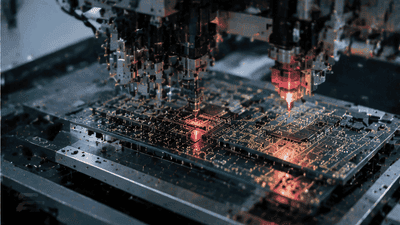
The interesting part is not just that ASE and Amkor are spending more. It is how they are spending. Their 2026 priorities show a deliberate move toward higher-value packaging, more testing capacity, broader geographic coverage, and better support for the next wave of multi-die systems. That combination matters because advanced packaging is no longer about adding a little assembly capacity here and there. It is about building the industrial backbone for the era of heterogeneous integration.
The New Investment Logic
For years, packaging and test were often treated as downstream services that followed wafer demand. Today, they are strategic bottlenecks. AI accelerators need HBM integration, massive interconnect density, and precise thermal management. Chiplet-based products need more sophisticated assembly flows and better test strategies. Mobile, automotive, and networking products are all moving toward more complex system-in-package structures. In that world, capital expenditure is not merely a maintenance decision. It is how companies secure market position.
ASE and Amkor are responding to the same structural truth: the most valuable packaging capacity is the one that can support the hardest products. That means 2.5D integration, high-density fan-out, advanced testing, and the supporting infrastructure around them. Their CapEx priorities reflect a race to scale those capabilities before demand outruns supply again.
ASE's 2026 Playbook
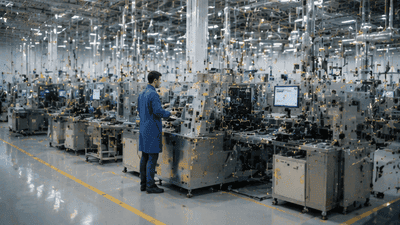
ASE has been increasingly explicit that advanced packaging is a major growth engine. Its 2026 CapEx focus is centered on expanding advanced packaging capacity, supporting AI and HPC workloads, and building a more flexible global footprint. That is not just about adding square meters. It is about upgrading the company’s role in the semiconductor supply chain.
A few themes stand out in ASE’s spending priorities:
- Advanced packaging expansion. ASE is investing heavily in the capacity needed for high-end packaging flows, especially those tied to AI and HPC demand.
- Testing infrastructure. As packages become more complex, final test and wafer test become more important, so ASE is boosting its test capabilities as part of the same growth plan.
- Regional balance. ASE is continuing to expand its multi-region footprint so it can serve customers who care about resilience, localization, and supply chain flexibility.
- Smart factory upgrades. More automation, better process control, and improved throughput are part of the capital plan, not just new buildings.
ASE’s approach reflects the reality that advanced packaging is not just a technology segment. It is a capacity game. The company wants to be ready for large AI-driven orders while also supporting a broader customer base across mobile, industrial, and networking markets. That makes its CapEx strategy both ambitious and diversified.
Amkor's 2026 Priorities
Amkor’s 2026 CapEx story is similar in direction, though it has its own style. The company is clearly leaning into AI and HPC as a long-term catalyst, while also building out its advanced packaging portfolio in a measured but aggressive way. Its investments are aimed at high-density fan-out, flip-chip, and other advanced structures that can support the next generation of computing products.
Amkor’s priorities look like this:
- High-density fan-out capacity. This is one of the most important areas of focus because it supports compact, high-performance modules for advanced chips.
- Global footprint expansion. Amkor is increasing its manufacturing presence across regions to match customer supply chain preferences and reduce geographic risk.
- Testing and yield improvement. As more complex packages come online, test becomes more than quality control; it becomes a major contributor to throughput and product readiness.
- Capacity for advanced AI programs. The company is clearly preparing for larger AI and HPC volumes that require sophisticated packaging and reliable execution.
What stands out about Amkor is how its CapEx strategy ties together packaging and testing as one coordinated growth system. That is increasingly the right way to think about heterogeneous integration. A package is only as useful as the test flow that validates it and the capacity that can scale it.
Why Test Matters So Much
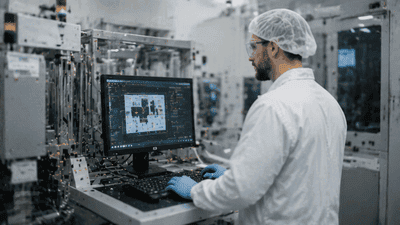
One of the most important shifts in 2026 CapEx planning is the growing emphasis on test. Advanced packaging creates more complex failure modes, more interconnect paths, and more opportunities for yield loss. That means capacity is no longer just about how many packages can be assembled. It is also about how quickly and accurately those packages can be tested.
Both ASE and Amkor are investing in test because the industry is moving toward a “system-level” mentality. Multi-die packages need more advanced screening, more wafer-level validation, and more final test infrastructure. The package, the die, and the system are all linked. If one stage lags, the whole chain slows down.
This is especially true in AI. A high-value accelerator package is expensive enough that any defect can have a meaningful impact on economics. Better test capacity means better yield learning, lower scrap, and faster time to volume. That is why test CapEx is increasingly viewed as a strategic enabler, not an afterthought.
Advanced Packaging as a Capital-Intensive Business
Advanced packaging is changing the economics of OSATs. A traditional packaging line could be expanded with relatively modest investment compared with a wafer fab. That is no longer true for the most advanced flows. Fan-out, 2.5D, 3D, and sophisticated multi-die integration all require expensive tools, tighter process controls, and highly trained personnel.
That is part of the reason ASE and Amkor are both increasing CapEx so aggressively. They are not simply adding volume. They are stepping into a more capital-intensive version of packaging. New cleanroom space, specialized equipment, improved metrology, and more robust test systems all push spending higher. The payoff, however, is access to the most valuable part of the packaging market.
In practice, this means advanced packaging now behaves more like a strategic manufacturing platform than a commodity service. Customers want guaranteed access, consistent yields, and the ability to move quickly from design to mass production. Capital spending is how ASE and Amkor buy that capability.
AI and HPC Are Driving the Cycle

There is no way around it: AI and HPC are the main reasons CapEx is rising. These workloads demand massive bandwidth, dense memory integration, and lower power per bit. They are also large, expensive, and strategically important enough that customers are willing to pay for better packaging. That creates a favorable investment environment for ASE and Amkor.
The AI cycle affects packaging in several ways:
- It increases demand for HBM-integrated packages.
- It raises the importance of high-density fan-out and 2.5D assembly.
- It pushes test and qualification requirements higher.
- It encourages customers to seek multi-region supply and long-term capacity commitments.
This is why both companies are treating advanced packaging as a growth platform rather than a cyclical bump. If AI demand remains strong, the payoff from these CapEx decisions could be substantial. If demand broadens into more markets, the investments become even more valuable.
Geography Is Part of the Strategy
Another notable feature of 2026 CapEx planning is the geographic dimension. Customers increasingly want supply chain resilience, and that means production capacity in more than one region. ASE and Amkor are both leaning into this reality by expanding where it matters most and reallocating capacity toward higher-value products.
This matters because advanced packaging is not just a technology race. It is also a logistics and risk-management race. A company with capacity in multiple regions can better serve global customers, adapt to local demand, and reduce vulnerability to disruptions. In advanced packaging, geography is now part of the product.
Amkor has been particularly active in aligning capacity with regional supply chain needs, while ASE’s footprint gives it a strong platform for serving customers across Asia and beyond. The common theme is clear: advanced packaging customers want access, flexibility, and reliability, and CapEx is the tool that delivers all three.
What This Means for the Competitive Landscape
ASE and Amkor are not spending just to spend. They are defending and expanding their positions in a market where advanced packaging is becoming the highest-growth portion of the business. That puts pressure on competitors, but it also raises the bar for the entire industry.
The implications are straightforward:
- More capacity will come online for advanced packaging and test.
- Competition for AI and HPC programs will intensify.
- Customers will gain more options, but they will still be constrained by yield and qualification.
- The ability to deliver high-quality packaging at scale will separate leaders from followers.
ASE and Amkor are both trying to make sure they are not just present in this market, but essential to it. Their CapEx plans suggest they understand that advanced packaging is where long-term value is forming.
Risk and Timing
Of course, large CapEx plans come with risk. If demand shifts more slowly than expected, utilization could disappoint. If new facilities or tools ramp too slowly, depreciation can pressure margins before revenue catches up. If technology transitions do not mature on schedule, some of the new capacity may not be immediately profitable.
That is why timing matters. ASE and Amkor are both making bets on a market that is strong today and likely to remain strong, but not without volatility. The companies need their spending to line up with product ramps, customer launches, and process learning curves. In advanced packaging, building capacity is one challenge. Filling it with the right mix of high-value products is another.
Still, the rationale is compelling. The alternative would be to miss the AI-driven packaging wave and let competitors capture the most lucrative business. In that context, the risks of underinvestment are at least as serious as the risks of overspending.
Looking Ahead
The broader message from ASE and Amkor’s 2026 CapEx priorities is that advanced packaging has become a major industrial battleground. The next few years will likely bring more 2.5D, more fan-out, more advanced test, and more regionalized capacity. Companies that want to win in AI, HPC, and chiplet integration will need trusted packaging partners with enough scale and technical depth to keep up.
For ASE and Amkor, that means spending now to secure position later. It means treating advanced packaging as a core growth business, not a side business. And it means understanding that heterogeneous integration is no longer an experimental concept. It is the architecture of the future, and the facilities that support it are now strategic assets.
Conclusion
ASE and Amkor’s 2026 CapEx priorities tell the same story in two different voices: advanced packaging is where the growth is, and capital must follow. Whether the focus is on high-density fan-out, 2.5D integration, test expansion, or regional capacity, both companies are signaling that they intend to play a leading role in heterogeneous integration.
The broader lesson is simple. In the semiconductor industry, the most important investments are increasingly being made not just in chips, but in the infrastructure that combines chips into systems. Advanced packaging is that infrastructure. ASE and Amkor understand this, and their 2026 spending plans show that they are building for a future where the package is as strategic as the die.
You May Like

Narrowing Spread Between NAND Spot and Contract Prices in 2026 – A Signal
By 2026, one of the most watched metrics in the NAND flash market has started to shift in a subtle but meaningful way: the spread between spot prices and long‑term contract prices is narrowing. For casual observers, this may look like just another incremental change in a notoriously volatile industry. For memory makers, module houses, device OEMs, and data center buyers, however, a tightening gap between spot and contract prices is a signal—a reflection of evolving supply–demand balance, risk perceptions, and strategic behavior on both sides of the market.

Price Divergence Trading Strategies Between NAND Flash and DRAM ETFs
NAND flash and DRAM sit at the core of AI storage and computing power. Both are memory, but they are not the same business. DRAM is main memory—fast, volatile, and central to high‑bandwidth workloads like AI training and inference. NAND is non‑volatile storage—slower than DRAM, but crucial to persistent data and large‑scale object storage. The cycles that drive their pricing and margins overlap, yet they often diverge. That divergence is where trading strategies between NAND and DRAM ETFs become interesting.

China’s HBM Localization Progress: The Catch-Up Pace of CXMT and XMC
China’s drive to localize advanced memory technologies has accelerated over the past several years. High-Bandwidth Memory (HBM) sits near the center of that strategy because it is integral to AI accelerators, high-performance computing (HPC) and other strategic compute platforms. Two domestic players—ChangXin Memory Technologies (CXMT) and XMC (Xianghui Memory, commonly referred to as XMC)—have become focal points in assessing how quickly China can close the gap with international incumbents on HBM die, stacking, and packaging.

Thermal Simulation Challenges and Solutions in 3DIC AI Chip Design
As AI workloads push chips to deliver ever higher compute density, designers are increasingly turning to three‑dimensional integration (3DIC) to stack dies vertically and pack more functionality into limited footprints. While 3DIC architectures unlock significant performance and bandwidth advantages, they also introduce complex thermal behaviors that are far harder to predict and manage than in traditional 2D layouts.

An Attempt at Compiling a Memory+Compute Fusion Thematic Index – A Dual-Track Framework
Most AI investors talk about “compute” as if it were the whole story: GPUs, accelerators, chips, cores. But every one of those cores needs somewhere to read from and write to. Memory and storage define how wide the data highway really is. In practice, AI performance is a fusion of compute and memory, not a solo act. So why do so many indices and ETFs separate them into different silos—one for semiconductors, one for memory, one for data centers—when the actual workloads keep blending them?

Surging Demand for Laser Drilling and Plasma Dicing Equipment in Advanced Packaging
Advanced packaging has become one of the semiconductor industry’s most important growth engines, and it is now pulling a surprising set of process tools into the spotlight. Among the most in-demand are laser drilling and plasma dicing equipment. These machines sit close to the heart of heterogeneous integration, fan-out packaging, wafer thinning, TSV formation, glass substrate processing, and other advanced flows where precision, yield, and throughput matter enormously. As packaging moves from a back-end afterthought to a strategic platform, the equipment used to shape, open, and separate materials has become just as important as the dies themselves.
D2D Interface Bandwidth and Latency Comparison in Chiplet Architectures
Chiplet architecture has turned the package into a real performance battleground. Once multiple dies are placed side by side or stacked within the same advanced package, the quality of the die-to-die, or D2D, interface becomes one of the most important determinants of system behavior. Bandwidth is no longer a nice-to-have metric, and latency is no longer a small implementation detail. Together, they shape whether a chiplet system feels nearly monolithic or frustratingly fragmented.

Stock Selection Logic and Alpha Validation of ESG-Themed Semi ETFs
Semiconductor themed ETFs are no longer just about growth and cycles. A growing subset now layers environmental, social, and governance (ESG) criteria on top of traditional sector exposure. These ESG semi ETFs promise two things at once: access to one of the market’s most powerful secular themes, and alignment with sustainability and governance standards. The pitch is appealing, but it raises two hard questions. First, how exactly are these stocks being selected? Second, does the ESG overlay help, hurt, or leave alpha unchanged?